Day 50: Opening Oregon

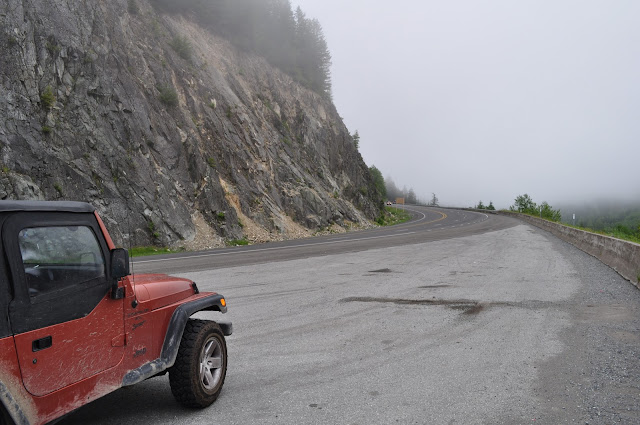
The big open wilderness of Oregon was masked as I drove southeast from the Portland area. As I climbed the pass on 26 highway I joined Mt. Hood in the blanket of the clouds. Driving through Oregon was a lot like opening a present layer by layer. After my foggy drive through Mt. Hood National Forest the land opened up in front of me as a high desert plain. Brushy vegetation was in bloom with snow-capped mountains in the distance.
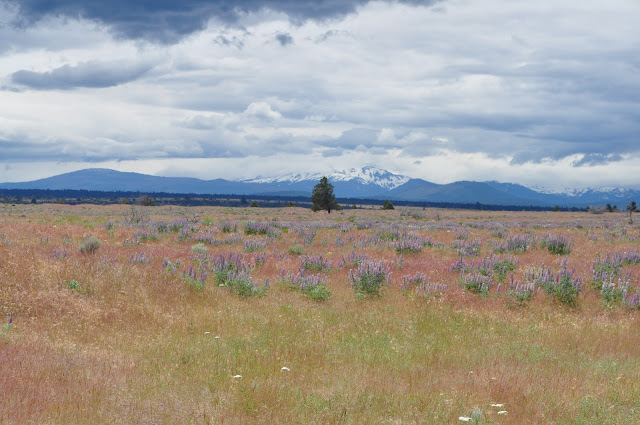
Oregon Landscape. June 28, 2011. North of Warm Spings, OR

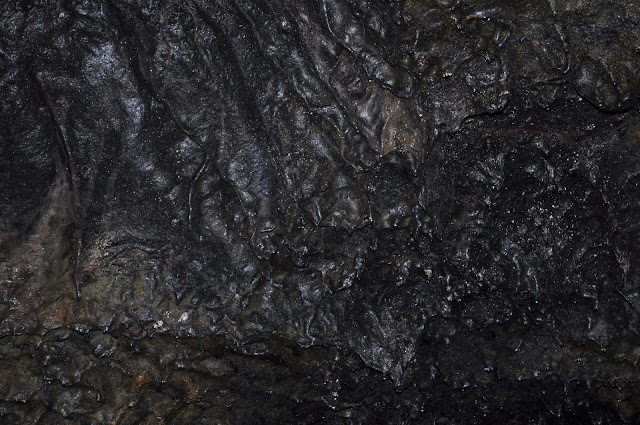
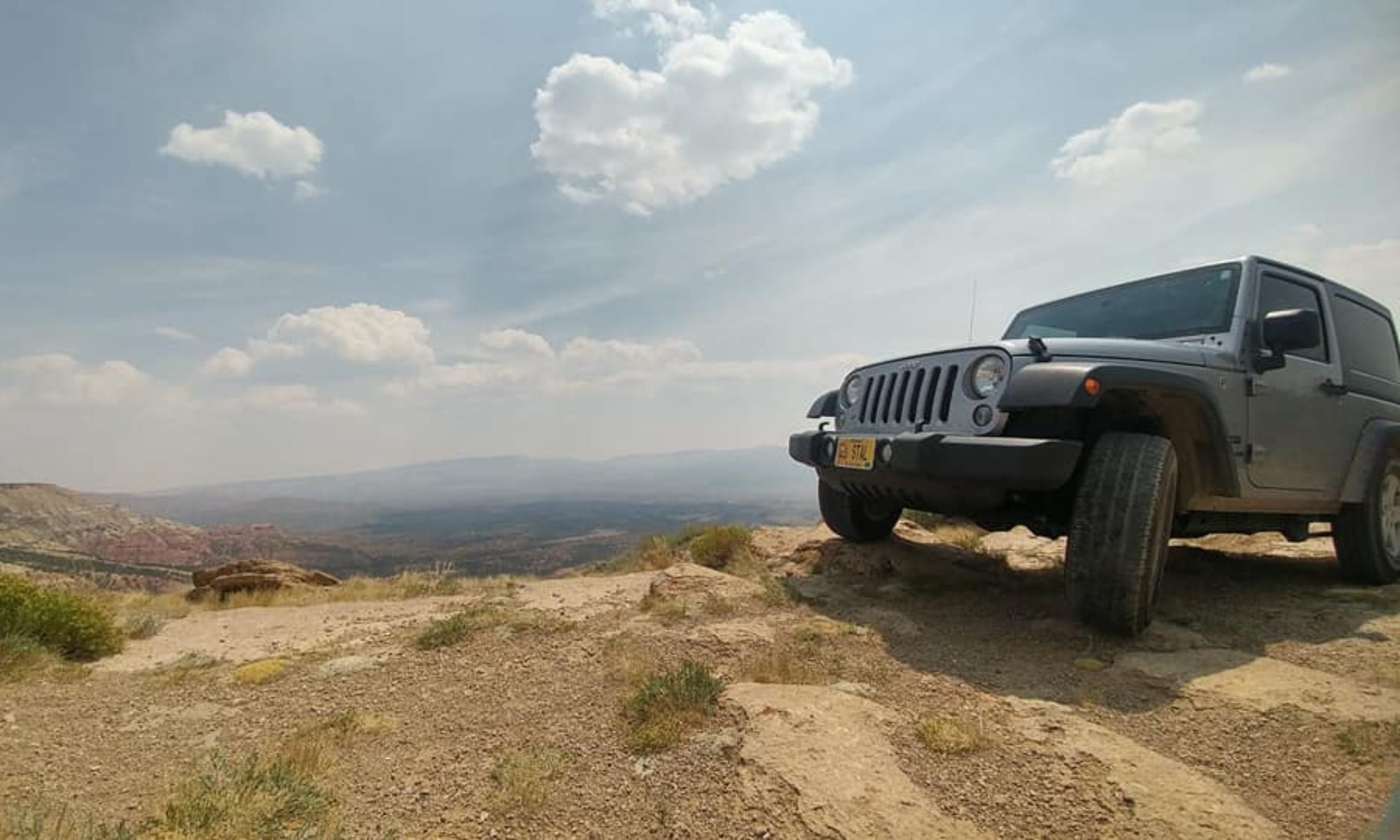
After I passed Warm Springs, Oregon I ran into some beautiful examples of columnar jointing in basalt. At first it towered straight into the sky, and further down the road the pattern made a swirl like I have never seen. I’m not as familiar with igneous rocks so I don’t know what causes the jointing to swirl in different directions rather it’s preferred vertical pattern. If anyone knows please inform me. I live to learn! (See the cover photo for this entry)
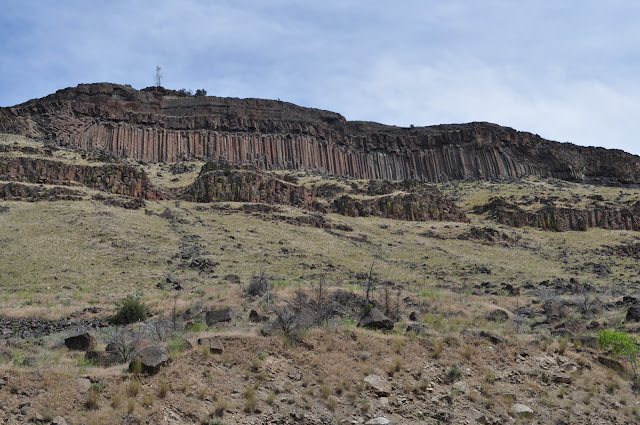
Columnar Jointing in Basalt, Oregon June 28, 2011

Further down the highway I stopped at the Ogden State Scenic Viewpoint. It overlooks a beautiful basaltic canyon carved by the Crooked River. The canyon edges are more than steep- they are completely vertical. The canyon is over 300 feet deep and proved impassable until 1911 when they finally had the technology and resources to build a bridge.

Ogden State Viewpoint. Oregon June 28, 2011

While the view is gorgeous, I think one of the main reasons to visit would be to see the warning signs. There are several different flavors of humorous, albeit justified, warning signs. I think my favorite was the one below that shows a dog jumping off a cliff.

Sign at Ogden State Viewpoint, Oregon Juen 28, 2011

After stopping by a Trader Joes to get ingredients for dinner I headed towards my planned campsite. I was pretty excited to camp in Oregon. I knew the weather would be wonderful and it would be my first experience in Oregon. Unfortunately a less humorous sign than those of Ogden State Scenic Viewpoint were ready to welcome me in the state:
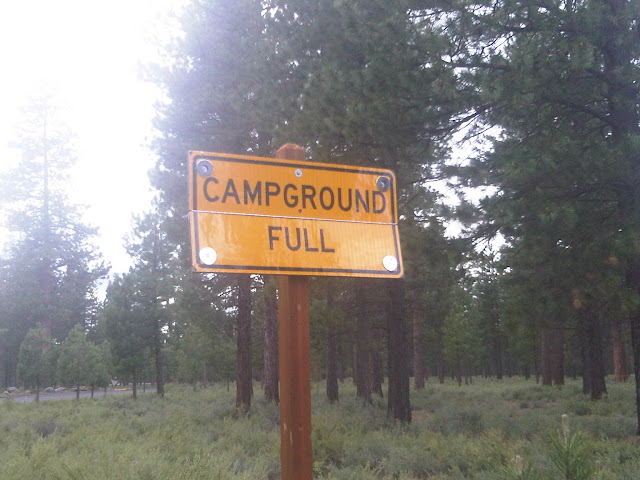
Campgrounds were full in Oregon. June 28, 2011

After spending several hours driving from campsite to campsite only to be greeted by the same message I had to surrender to a hotel. Remember how I mentioned yesterday it was important to plan for extra spending money? This is a perfect example of why anyone should plan to do just that. Hotels are certainly more expensive than a campground.
The hotel stay turned out to be a blessing in disguise. The owner happened be someone who had been caving a few times and had the inside info on some local lava tubes I could explore. He gave me directions to 3 or 4 different places I could go visit to round out my lava tube experience from yesterday’s Ape Cave.
I may have been taken out of the campground for the night, but nothing could take the camp out of me. I had planned on browning the ground turkey I purchased at Trader Joes so I could make turkey tacos and nothing could stop me. I set up my camp stove on the sidewalk and brown the half pound of ground turkey (I usually cooked all the meet then all I had to do is keep it in the cooler and reheat at the next camp). I enjoyed my turkey burgers with a sense of accomplishment and laughter at the looks other hotel guests gave me.
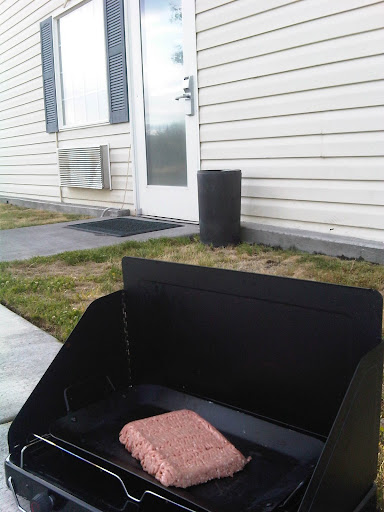
Cooking at a Hotel in Bend, Oregon. Juen 28, 2011

Oregon’s outdoors may have escaped the grasp of my tent tonight, but as a result tomorrow I would be doing something well worth the inconvenience: Caving. I’ll see you all underground tomorrow.
-Nicole

I tried a local beer and it commended me. Oregon June 28, 2011

Day 49: Mt. St. Helen’s National Park & Ape Cave

Day 49: Mount St. Helens National Park & Ape Cave
There are a few different types of travelers out there one can embody. One can be the careful traveler, someone who sticks to the main roads and a strict agenda. Reading all of the signs and going only to those places known for tourism this traveler sees the same sort of things that they can experience with an internet service and a basic knowledge of search engines. The places this kind of traveler goes to have already been seen over and over, and from the exact same perspective. The careful traveler only stops to photograph views that are designated by road signs and very likely stands right next to the sign with a camera icon for every scenic picture. A typical cookie-cutter vacationer who wants to see everything they’ve seen in photos exactly as they have seen them.
Another type of traveler one can be is the reckless traveler. These types jump in head first without reading the signs. They trespass into places they have no knowledge of and destroy delicate ecosystems and ancient rock forms. The reckless travelers are the ones who run out of gas and money before the allotted time for vacation is even near to being up. They don’t plan a vacation at all, and leave home with none of the gear they will need forcing them to use all of their spending money on supplies only to show up to the park and learn they can no longer afford the admission fee. This traveler is also the most likely to be injured not because of their activities, but because of their lack of information, common sense, and planning.
There is a third type of traveler and this is the one that I strive to be. It walks the line between careful and reckless. This traveler plans their vacations well but allows for a good amount of wiggle room in budget and time. This traveler plans a generic agenda but is prepared to change it on the fly when they come across something new. They will leave the well-beaten path, but only because they have educated themselves in how to handle every situation. They aren’t always law abiding, but they are respectful and resourceful. This type of traveler is known by a single adjective.
Adventurous.

Mt. St. Helens June 27, 2011. "29" and I.

Mount St. Helens is a place of adventure. Most people think of Mt. St. Helens and think of the explosive event of 1980 when the nation was glued to the news as they watched a mountain transform in front of their eyes. This is one of the aspects of adventure that many of us seek: a slight sense of danger. You can’t get that when you are on confined trails with a monotone tour guide telling you the kindergarten version of the geologic history. The Mt. St. Helens National Park has many things to see and is surprisingly well catered to the traveler who doesn’t want the cookie-cutter guide to take them around (although they do have this on request).

An angry "29". Mt. St. Helens N.P. 6.27.2011

The drive up Mt. St. Helens started out exactly as I expected it. The long, winding road wound up the side of the slumbering volcano, rocky road cuts slowly being replaced by something that looked more like volcanic ash just as one would expect. Unfortunately this mountain was no different than the rest in the country that had received an excessive amount of winter precipitation. I drove for almost 40 miles to find out the pass was closed. It was still buried under 10 plus FEET of snow. My Jeep doesn’t usually care for “Road Closed” signs too well, and it sought an alternate route…. but I force disappointed “29” back down the winding road for an over 100 mile detour to get to the other side of the park.

Ape Cave. A lava tube in Mt. St. Helens National Park. June 27, 2011

On the other side of the park sat Ape Cave, a lava tube that was discovered about 30 years prior to the famous eruption of Mt. St. Helens. It is 12, 180 feet long, completely dark (as you would expect any cave to be), and a lot like a subway tunnel full of sharp boulders. Inside you get a to take the choice of two routes, Upper Passage or Lower Passage. The Lower Passage only goes about 0.75 miles and is an easy walk. Upper Passage is 1.25 miles and a more difficult traverse, climbing large boulder fields and scaling an 8-foot “lava fall” free style. Best of all: The entire tour is self guided and you must provide your own lighting. Guess which route I took…

A skylight in Ape Cave lava tube. Mt. St. Helens N.P. 6/27/2011

Upper Passage was a lot of fun. I will have to say that I found my first lava tube to be interesting, but rather boring in comparison to the winding limestone caves I am used to in the Midwest. Ape Cave is a pretty typical lava tube, a very straight cylindrical cavern with a few sky lights here and there, and small lava drips that hang from the ceilings. The temperature is cooler than the caves I am used to, averaging only 42 degrees fahrenheit.

Ape Cave lava drips in Mt. St. Helens N.P. June 27, 2011

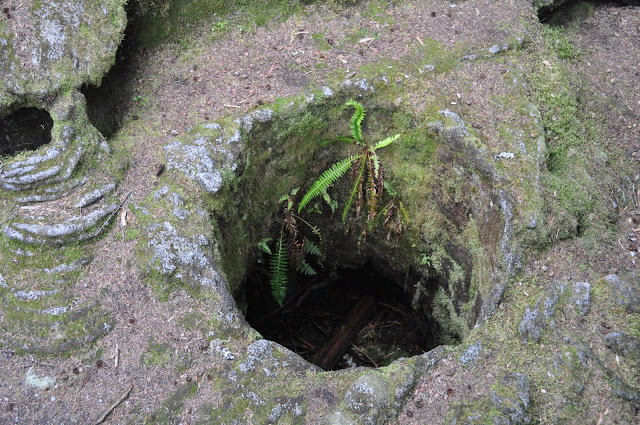
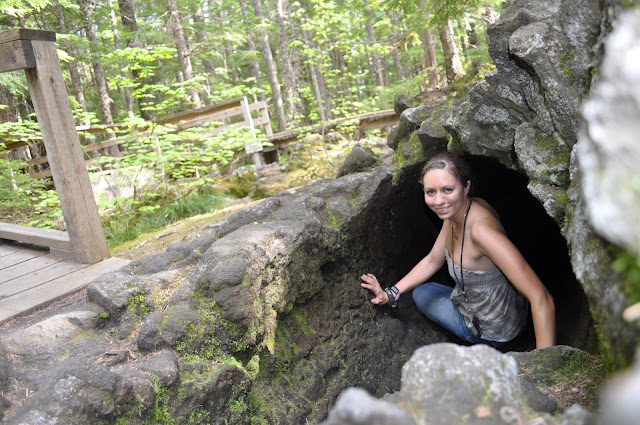
After my tour of Ape Cave (I must proclaim the tour guide was fantastic…lol!) I headed to another interesting place of interest that wasn’t on the agenda. The Trail of Two Forests is a lava flow with hollows where trees originally stood. You can see the ghost tress almost perfectly preserved in the lava, and you can even play a game of prairie dog if you are so inclined, crawling through the tree hollows and popping up through skylights. The place is pretty interesting, and a lot of fun for kids (or the kid in you). Yet another example of how hands-on Mt. St. Helens N.P. seems to be. It allows you to be the adventurous traveler, leaving the paved path and mundane talks behind while still remaining safe and informed.

A tree cast in Mt. St. Helens N.P.'s "Trail of Two Forests" 6/27/2011
Me in a ghost tree! "Trail of Two Forests" in Mt. St. Helens N.P. 6/27/2011

On the way out I ran across some off-roading trails. There were no signs forbidding me to drive on them so I took advantage of the opportunity to jostle around on dirt and rocks in the shadow of a snow-covered Mt. St. Helens. There couldn’t have been a more perfect ending to the day.
If you find yourself preparing for a vacation please keep in mind what I have said. You can’t truly experience other worlds if you don’t leave the path, but you need to do so smartly. Be the adventurous traveler, plan your trip with plenty of spare time to enjoy anything you run into, and be ready to change any existing plans at the drop of a hat. A vacation isn’t an itinerary and a bunch of duplicated post card photos. Travel is for experience, for knowledge and growth, for relaxation and something out of the norm.
The only traveler worth being is the adventurous traveler. Anything else can be spent reading a book or a week in the hospital.
Tomorrow I will be continuing my adventurous journey of the summer. My Grand Summer Adventure. Tomorrow will be my 50th day since I embarked on my journey but I’m not slowing down yet. There’s still so much to see, experience, learn…..and share. I’ll see you all there.
Nicole

A view into a cavern from above. Ape Cave in Mt. St. Helens N.P. June 27, 2011

Day 48: The Rainbow of Olympic National Park

Many emblems of the world hold multiple meanings. It is of no surprise that a rainbow holds various meanings of symbolism. A rainbow can be a sign of success after a hard time or a symbol that it is ok to be yourself even if you stand out from a crowd. It can also be a way to describe something that has many different faces and colors. A rainbow expresses itself by claiming that it is not strictly the embodiment of one self, but many. Olympic National Park is also a park of many colors- and yes, it even has rainbows.

The Hoh Rainforest of Olympic National Park. June 26, 2011

It comes as a big surprise to many that the continental United States is actually home to a rain forest. The Hoh rain forest located within the protective confines of Olympic National Park  receives an average of twelve FEET of rain. This was the first color of Olympic N.P. that I was able to experience, only a few miles south of my campsite in Bogachiel S.P.

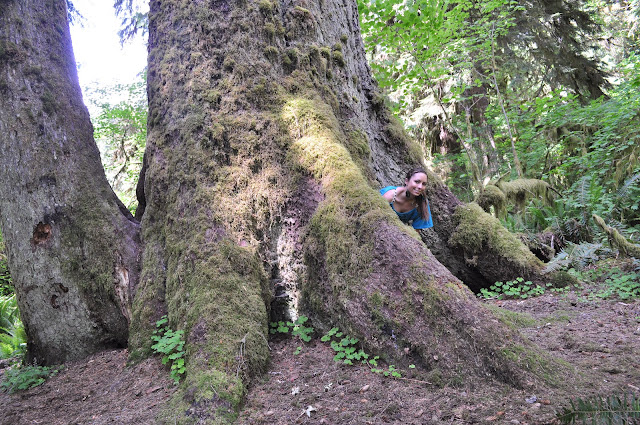
Me, peaking out from a Sitka Spruce in the Hoh Rainforest. Olympic National Park June 26, 2011

The lush rain forest is a lot like you would expect. Temperatures are moderated by the lower elevation and maritime effect of the nearby coast; it rarely drops below freezing or above 80 degrees Fahrenheit. Mosses, ferns and lichens grow all over everything, from the expected soil to the trunks of trees and other woody plants they can cling their sticky roots to. The Sitka Spruce trees are probably the most sought trees to visit, they tower into the sky by more than 20 stories.

The circular rainbow of Olympic N.P.'s Hoh Rainforest June 26, 2011

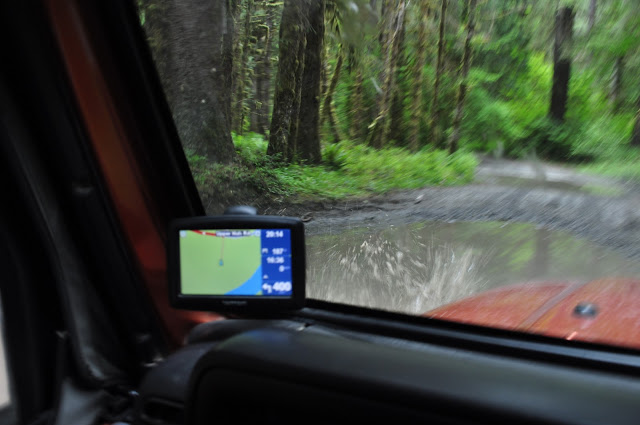
Looking up into the sky- although the dense rain forest does make the sky patches few- often gives you a view of a rainbow halo. The mist from the humid rain forest rises into the sky, forming a circular rainbow that encompasses the sun. Nearby is the Hoh River, and mud roads lead to the cobbled riverbed that you can drive up onto, right up to the river’s edge. It is a beautiful sight (and a lot of fun for those who drive Jeeps!)

Driving in the mud puddles of Hoh Rainforest. June 26, 2011

The colors of Olympic National park don’t stop there. As I headed south along the coast I was able to visit the park’s 73-mile long wilderness coast. Here the forest meets the Pacific in grand views overlooking rocky cliffs, tide pools, towering rocks in the surf, and boneyards of giant Sitka Spruce and other trees that accumulate at river deltas.

A stream outlet and tree boneyard in Olympic National Park's Coastal Wilderness. June 26, 2011

The coast is breathtaking, a stark contrast against the enclosing, green walls of the rainforest, it opens up into a great big sky and the sea that stretches further than the eye can see. Wildflowers line the cliffs as you look down upon the sandy beach below, and in the distance islands interrupt the endless waves of the Pacific.

The Olympic N.P. Wilderness coast. Washington State, June 26, 2011

Looking back inland you can see the mountainous portions of Olympic N.P., some peaks are still topped in snow, an alpine ecosystem less than a half day’s drive from the temperate rain forests and coastal beauties. Not only does the park have rainbows, it is a rainbow itself.
Tomorrow I will be visiting two more colors of the rainbow of a geologic world- ones I have yet to see in person. What colors will I see tomorrow? I guess you will have to come back to find out.
-Nicole

The tree boneyard in Olympic N.P.'s coastal wilderness. June 26, 2011

Day 47: Ferry Boats and Fairy Tales

Escape from reality is something sought by a majority of society. Whether we read a book, watch a movie or tv show, or play video games we are all looking for a break. Many people even spend a large percentage of their time achieving this goal. Life is so mundane in reality that we have to live other lives within our mind. It is a recent addition to the needs of being human- we used to be too busy working to live to delve into creative arts. Now we don’t only create alternative worlds, we live in other’s creations.
Today was a day where I would mesh both worlds together. A few of the fantasy worlds that I enjoyed as a guilty pleasure when I needed a break from the daily grind, and the real world, were about to come together. As I left Seattle I decided to leave in the only way a Grey’s Anatomy character would: On a ferry boat.

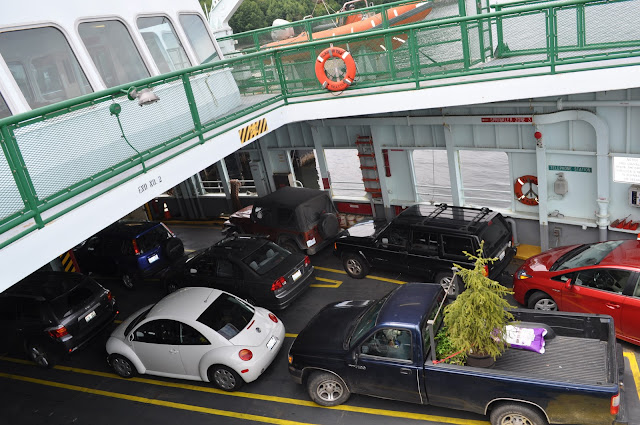
My Jeep, "29" on the ferry boat from Fauntleroy to Southworth. June 25, 2011

My Jeep is the epitome of adventure, and I have been many places in it. So far I have driven on snow, rocks, roads, mountains, deserts and the great plains. Today my Jeep would accomplish something it had never experienced before: it would drive onto a boat and ferry across the bay. I pulled into line at the Fauntleroy terminal where I would board the ship. I enjoyed some more “No Woman” cheese from Seattle’s Beecher’s cheese (courtesy of a relative I stayed with in Seattle) as I waited in line.
Boarding a ferry is kind of like parking at a big event. They line you up in order and direct you into a specific line where you will park as close as possible to the car in front of you. The instant everyone parks they exit and run up to the top deck where they can shelter from the cooler weather and enjoy concessions. I stayed on the lower deck for a while, enjoying the solitude and feeling the sea breeze. I imagined that Meridith enjoyed the same breeze as she stood on the ferry with Derrick. I think sometimes we spend so much time enjoying these alternate realities we forget that these characters aren’t real…they feel real.
I decided to head up to the concession to get a cup of hot tea and explore the rest of the ferry boat. I could stand at the antiqued controls of the boat just like I was the captain. As I sipped my coffee I took in the view of the water rushing away behind me. On the back wall a plaque was placed in memory of the former captain of this ship. Captain David Summerfield Moon was the former first officer, he died in June of 1977 when he went down with his ship in Alaska. The plaque offered no details of the story, but I imagined it to be one of bittersweet courage. A man surely born a sailor and died a sailor.

The ferry boat controls. June 25, 2011. Seattle

After deboarding the ferry boat I followed the coast of Washington, circling around Olympic National Park until I reached the town of Forks. Seattle held the familiarity of the Grey’s Anatomy set without announcing it’s significance. It made the illusion of being a part of the fairy tale more real. Forks, however, announced it’s new found fame every opportunity it had. Businesses left and right claimed to be the place to get Twilight merchandise, and a Twilight fan store on the main road played the theme music on loud speakers into the street.
While I had also become a victim of the Twilight series, so enraptured by the story that I read all four books within two weeks of  each other, this Forks was not the one I had in my head. The commercialism had destroyed my fantasy world when it came to Forks. All I could think about is how annoyed the residents of Forks must be with all of the Twilight fans coming to visit. While I was excited to visit Forks because I could see the real life place that one of my fairy tales took place in, I was a little embarrassed to admit I was a fan to anyone.

Forks, WA laundry mat. June 25, 2011

I knew I had to do laundry, so I found the only laundry mat in Forks and sat up shop while my attire swirled in the triple load washers. I went through pictures and looked up some more information on my campsite for the night: Bogachiel State Park . While the scent of gain filled the room as my clothes went through the dryer I chatted with a local girl who was there doing laundry as well.
I went to the local grocery store hoping to get some local cherries. Surely they would be cheaper here in Washington than back home in the midwest. I was disappointed to see that they were $10.99 per lb, so I bought some grapes instead, along with some wines. I was about to have a gourmet meal cooked over a campfire.

My campsite at Bogachiel State Park in Forks,WA. June 25, 2011

Bogachiel State Park was a lot like the forest I imagined Bella and Edward wandering through the rain forest. Everything was so green, moss clinging to the tree trunks, very little of the ground wasn’t covered in ferns or moss. It was, just as the main character of Twilight first described it, an alien world. Too green to be real.

Salmon Berries in Bogachiel State Park Forks, WA June 25, 2011

In the green shrubs I found these salmon-colored berries that looked a lot like raspberries. I decided to try them even though I didn’t know what they were. They weren’t too flavorful, a bit more bland than the raspberries I usually enjoyed. I later found out they were unoriginally called “salmon berries” and were perfectly fine to eat. Let me tell you that I only tried a couple berries and was being a bit adventurous…and I do not recommend anyone try any wild fruits or plants unless they can clearly identify it. As so many television shows and commercials state, “Do not try this at home”.

Prosecco in the Seahawks glass. June 25, 2011 at Bogachiel State Park in Forks WA

For my dinner I cooked some leftover shortribs over the open fire, and enjoyed some Prosecco sparkling wine in my new Seahawks glass I had purchased the day before in Seattle. I chatted with my camp neighbors, two bicyclists that had been on the road for over a week already, and one of them dried their damp sweatshirt over my fire. There isn’t much room for firewood on a bike. It was pleasant to have some nice neighbors and I shared my ribs with them since I had way more than I could eat myself.

Bogachiel State Park in Forks, WA- short ribs on the camp fire. June 25, 2011

I then settled down for the night in my tent, in the dark underneath the shelter of the tall redwood trees covered in green moss. The reality of the worlds I escaped to from time to time in book and television were certainly different than the fantasy version, but they still held a mystique. In a lot of ways, Seattle and Forks both were better in real life than in the mind. The fantasy worlds had met reality today and as the dark closed in it was time for me to create my own fantasy world.  Tomorrow brings more reality- although to be honest, I’m beginning to think the reality of this summer is even greater than any fantasy world I could escape to.
-Nicole

Bogachiel State Park. June 25, 2011. Forks, WA

Day 46: Seattle

Day 46: Seattle’s Pike Place Market

After spending so much time in the wild part of the west it was time to heat back to civilization. Seattle was a city that held many things important to me.I had originally planned my route here to visit the University of Washington but later learned their programs weren’t quite what I was looking for in a grad school (While they boast high acclaims in the geology realm, speleology is not exactly something they can claim to fame). So while my professional reasons were missing for this particular visit I had planned this trip well in advance and I didn’t want to change it now.
Besides, I still had things I felt were important to experience in the Seattle area. I was able to examine the flood basalts on my way here. It was the home city to one of my favorite television dramas, Grey’s Anatomy. I wanted to experience the port city life and what it was like to be in the Pacific Northwest. Perhaps more importantly, it was home to the football team I cheer for, the Seattle Seahawks.The first thing I needed to experience while here was Seattle’s famous Pike Place Market.

Fish in Seattle’s Pike Place Market. June 24, 2011

Pike Place Market is probably the epitome of port city life. You walk through the market next to giant ice-filled bins of fresh fish and other seafood, and listen to the salesmen throw their pitches out to the crowd eager to listen. This market isn’t an ordinary market- it has inspired business marketing practices everywhere. If you go to any local bookstore in the business section you are guaranteed to find at least one with advice stemming from the Pike Place Market. These guys know how to sell, and they keep the attention of the entire crowd.

Fresh flowers at Pike Place Market. Seattle. June 24, 2011

Stands in the market vary greatly in their offerings, from jewelry to paintings to clothing and more you can find someone trying to sell something. Fruit stands are common and have fresh fruit from around the states, not just local fruit. The era of mass transportation has certainly changed the scene from what it would have been a decade ago. Fresh flower stands are also abundant in the market place, and as the day progresses the prices of the fresh bouquets drop. If I lived in Seattle I would imagine fresh flowers would be a common occurrence in my home.

“Piroshky, Piroshky” Russian cuisine in Pike Place Market, Seattle. June 24, 2011

The permanent shops that line the opposite side of the street are equally as seductive to the traveler or local. I chose to eat lunch at the famous Russian baker, “Piroshky Piroshky”. The line was long, but the food was well worth the wait. I ordered a lovely meat and cheese pastry, and followed it up with a sweet pastry they call “Oscar’s Star”, a chocolate and hazelnut filled treat in the shape of a star.

Beef & Cheese pastry from Piroshky, Piroshky in Seattle’s Pike Place Market. June 24, 2011
Oscar’s Star pastry from Piroshky, Piroshky of Seattle’s Pike Place Market. June 24, 2011

Street performers are common here as well, mostly musicians that play almost anything. There was even a man that was rolling a piano around on wheels. As I watched one man playing guitar in an eye-catching outfit I noticed another shop I had to visit: Beecher’s Cheese. My relative that I was staying with in Seattle had told me about a unique cheese that Beecher’s offered and I was intrigued. Cheese is a food group on it’s own to me.

Beecher’s Cheese in Seattle’s Pike Place Market. June 24, 2011

At Beecher’s you can watch them make cheese right in front of you, the big troughs of dairy being stirred behind glass panes as you stand in line to try some samples before purchasing. The cheese range in type, but the one I was recommended and found to be the most unique was called “No Woman” cheese, a cheddar type with Jamaican spices.

Seattle’s Beecher’s Cheese. June 24, 2011

On my way home I stopped by “Qwest” field, which was in the process of being renamed “Century Link” field. In fact I was watching them remove the Qwest letters from the field the very day I visited. I picked up a new Seahawks jersey, a pair of socks, and a new beer glass to enjoy my favorite beverages out of during game days this coming season- all from the pro shop across from the field.

Seahawks Socks. June 24, 2011

My visit to Seattle this time was short, but I enjoyed it thoroughly. I would love to come back one day (perhaps for a Seahawks game?), not only to visit the area but also to see my relative who I stayed with. She was very accommodating and introduced me to some new foods while I stayed in her home ( I tried my first Vietnamese dish, she is an excellent cook!). Tomorrow I would enjoy one last important mark of passage for any Seattle tourist as I leave the city: A ferry boat ride across the bay.
I’ll see everyone on the Pacific coast tomorrow.
-Nicole

Seattle Seahawks field- By the time I reached it the “QWEST” had been removed. June 24, 2011


Fresh produce in Pike Place Market. Seattle. June 24, 2011

Day 45: Exploring Forest Service Roads Washington State

Today I took it easy and enjoyed some “Free Exploration” time to get a little more time in with the rural areas of Washington before I headed into Seattle. I started heading in the general direction of Seattle on the highways and took a detour anytime I saw something interesting. I decided to explore the forest service roads of the area and I found some great places to camp in the future.

"29" and me, exploring Washington's Forest Service Roads. June 23, 2011

I ran into an abandoned cabin and decided to wander around it. I took my Jeep up and down the roughly-maintained roads and enjoyed the warm weather. It wasn’t anything too exciting but it certainly wasn’t boring. Oddly, it felt like I was back at home cruising the gravel roads and exploring abandoned farm houses. The roads had a larger distribution of elevations and the weather was a bit cooler than Missouri would be this time of year, but the activity was comforting.

The Abandoned Cabin in Washington. June 23, 2011

Tomorrow I would be exploring Pike Place Market in downtown Seattle. I took a deep breath as I returned to the highway and followed the concrete trail into the city. It’s amazing how quickly your surroundings can change from country to city. I was ready for some city-style relaxation and shopping. I would be staying with a relative of mine for a few days and exploring Pike Place Market. I can’t wait!
-Nicole

Abandoned Cabin in Washington State. June 23, 2011

Day 44: An Intro to Washington State

Did you know that Washington has high desert plains? It has plateaus and mountains, rivers and lakes, snowy peaks and great big canyons? I always thought of Washington as the green state- eternally covered from top to bottom in green plants. There is a lot more to Washington than I thought.
I had planned on visiting Gardner cave so I left Sandpoint, Idaho and headed towards Metaline Falls, WA in the afternoon. It turns out that Gardner Cave, one of the few limestone caves of the state, is closed on Tuesday and Wednesday. Since it was a Wednesday I was unable to see the cave. I decided to pull out the hand atlas, unwilling to give the GPS another go at control quite yet, and found something labeled as the Lenore Lake Caves and I started heading in that direction.

The Grand Coulee of Washington. June 22, 2011

On the way south I ran into the Grand Coulee. This giant steep-walled canyon was carved by massive amounts of melting glacial waters as the Ice Age came to the end. It was once a waterfall even grander in scale than that of Niagara Falls. It was a 3.5 mile long, 350 foot tall water fall that rushed along carving the landscape into what it is today. The water that remains here today helps the desert wildlife thrive, and it is in this large canyon where the Lenore Lake Caves were carved out of the solid flood basalts.

Looking at "29", my Jeep, from a Lenore Lake Cave

Technically these “caves” aren’t large enough to be considered a true cave. They never transition past a twilight zone, but they do hold some historical significance. About 5000 years ago the natives used these “caves” as shelters. The native people resided here during the spring and summer to collect plants and herbs that were used in religious ceremonies.

Don't wear flip flops when hiking up piles of loose basalt breakdown! June 22, 2011. Lenore Lake Caves

I hiked up the cliffs (in flip flops…I’m a bit of a rebel like that….) and visited the inside of the shelters. They would have been fairly comfortable, keeping everyone dry while still allowing for a great view of the canyon in front of them. Looking down to the parking area my Jeep looked dwarfed. The trail up to the shelters was dotted with several different flowering plants.

A Lenore Lake Caves flower. June 22, 2011

So far my visit to Washington had not met a single preconceived notion. I had been in the typical mountain terrain, I had taken in the views of waterfalls both ancient and current, and watched as this terrain turned from a high desert plain, sparsely vegetated, to a fertile land of farm land enriched by the Columbia river. When I arrived in Wenatchee, WA I finally saw the first thing that truely told me I was in Washington State: Cherry orchards.
As I learned back in the winter of 2009-2010, states are only bounded politically, not geologically or by climate. Washington State has a little bit of everything as I have learned today. Soon I would be in Seattle, experiencing the mighty Pacific Ocean. When I visited Northern Arizona in January 2010 I saw that Arizona was more than desert- it had snowy, vegetated mountain terrain. Today I visited Washington and discovered it wasn’t all cool and green- but it also had desert terrain. Arizona and Washington have more in common than I thought!
-Nicole

The Grand Coulee. Washington State. June 22, 2011


One of the Lenore Lake Caves. June 22, 2011

Day 43.5: The Road Less Traveled

GPS.
Although I am from this era I have fought against the technology generation’s idea of navigation. It wasn’t until this past December that I even owned a GPS. I had borrowed family members GPS from time to time, but I always printed out maps and picked up state and local maps along the way. This summer was a little different. I had a North American atlas- from 2008- but I actually relied on my new GPS pretty heavily. In general the GPS keeps you on interstates and other highways well traveled and dotted with tourist traps and gas stations. Today I must have accidentally changed the settings.
I was making my way from Glacier N.P in Montana to Sandpoint, Idaho. I glanced at the atlas but turned on my GPS and followed it’s directions. I thought I would be staying on highway 2 all the way to highway 95 where I would be on the straight track to Sandpoint. Instead the GPS told me to turn left onto Mc Ginnis Meadows Rd., taking to long way to town.
Soon I found myself driving along a country mountain road that certainly wasn’t wide enough for another vehicle to pass me (if I had run into another soul on the 30 mile stretch of road at all…but I didn’t….I really was in the middle of no where). I don’t know exactly what happened to make the GPS direct me this way. I drove through the water of lakes that had crested their banks onto the dirt and gravel road, I tumbled over washouts above several hundred feet deep ravines filled with rushing rivers. I climbed up to tops of mountains and back down to the bottoms of the river-filled ravines.

Bumping along Vermillion River Rd in Montana/Idaho. June 21, 2011

There was a point where I was afraid I should have turned back. Surely driving alone on these roads where there was no cell phone service wasn’t the smartest move to make. Then again, I was on this trip for adventure…would I ever know what laid at the end of this road if I didn’t follow it? I continued on, and after a certain point it made no sense to turn back. It was time to embrace this near off-roading experience. It was actually quite scenic and the road was fun. I like to blame this event on my Jeep and my GPS plotting against me….

Why do they always have warning signs at the end of my paths of travel and not at the beginning? LOL! Juune 21, 2011

I was happy when I emerged from the wilderness at Noxon Reservoir as the sun began to turn the water gold. The rest of the drive to Sandpoint was along the water, beautiful and serene as it twisted around the mountaineous terraine. I was happy to arrive in town and I found a local restaurant in hopes to enjoy a big meal including a baked potatoe. I was in Idaho, afterall. Turns out the restaurant was out of baked potatoes…

Noxon Reservoir June 21, 2011

I guess that not everything is ideal, but that doesn’t mean it isn’t good. Sometimes life’s curveballs can be just as good as what we thought we had predicted for our lives. We try to make our plans for lives, and we alter those plans depending upon the information we receive. Sometimes, even with all of the information we find, life takes turns all on it’s own. It may not be ideal, but the strength and growth we find in ourselves when we meet unexpected obstacles makes life exciting. Sometimes better. We just have to wait and see. We may not want to plan to take the more perilous route, but the experience when we are put in a place to take it is one we will remember for a lifetime. That experience will help us suceed in the future, and it means we are stronger than those who have always received exactly what they wanted.
Tomorrow I venture to the far northeast of Washington state. I would say I’ll see you there, but I can’t be certain….I’ll just say I’ll see you tomorrow, no matter what tomorrow means.
-Nicole

A cave or mine along Vermillion River Rd June 21, 2011

Day 43: Glaciers, Deer and Bears, Oh My! Glacier N.P.

During my visit to Crystal Lake Caverns on Day 34 I spoke shortly on the effects of sacrificing small parts of nature to promote preservation of itself at large. Yellowstone and Glacier National Parks, both, show exactly what this means by changing the way nature interacts with human activity. My friend from Missoula and I went on two long hikes during our visit to Glacier National Park, and during both we noticed abnormal wildlife patterns, starting with our first drive through the park.
We arrived at the park only to find out that, like the rest of the continent, this winter had an abnormally high amount of precipitation and the snow pack was still blocking the pass. We would only be able to experience the Western portion of the park. We drove as far as we could and camped at the end, in the Avalanche Creek campground. The campsites are simple, a firepit and picnic bench with the wooded campsite, and no showers or hot water available. It was right next to the first trail we would hike that night, so we decided to go check out some of the lakes and rivers before we took hit the trail.

Glacier N.P. Blackbear June 20, 2011

On the drive back towards the western entrance we came across some traffic, which usually indicates some sort of wildlife has captured the attention of tourists. After sitting for a short time waiting for the cars to take their turn at taking pictures, we saw the black bear begin to wander around the cars. He took his time, looking into the cars to see who would, unintelligibly, offer him food.
The lakes here are glacial, and the biggest one that we were able to see was Lake McDonald. As may be obvious, a glacial lake is formed by a glacier, in the case of Lake McDonald, one that was over 2000 feet thick. As the thick river of ice slides down during melts it bulldozes dirt and rock in front of it, forming a wall called a terminal moraine. When the glacier receding as the climate warmed, the moraine was left behind, damming a lake that stretches to depths of 472 feet.

Lake McDonald in Glacier N.P. June 20, 2011

When we returned to our campsite we decided it was time to hike the Avalanche Creek Trail so that we could make it back before dark. We had been joking about the bear mace marketed to the city slickers, selling for a whopping $55 per can at the stores within the park. The black bears aren’t anything to worry about, but grizzlies can get pretty aggressive if they are startled by a humans. As long as you follow some common sense rules about wildlife they don’t normally bother you, but as has been indicated in the past few days these animals aren’t quite like normal wild animals. They are used to humans.

The Snowshoe Hare along Avalanche Creek trail in Glacier N.P. June 20, 2011

As we made our way up the 2 mile, 500 foot elevation gain trail (4 miles round trip), wildflowers in bloom everywhere indicating that spring had indeed sprung, we ran across a snowshoe hare. The rabbit hopped around nonchalant as we admired it. It wasn’t until I got within a few feet to take some pictures that he began to hop away. We made out way to the end of the trail that terminated at Avalanche Lake, which was incredibly muddy and wet. Along the north side of the trail Avalanche Creek followed along, carving out the bright red bedrock into curvy, smooth canyons. We laughed at the bear bells we could hear ringing throughout the woods. Fear does a number on people….

Avalanche Creek in Glacier N.P. June 20, 2011

On the way back down the trail to our campsite my friend stopped me mid-step. A deer, barely 10 feet away, walked across the trail and right next to us. Like the hare, she walked slowly along as if we were passing in a hallway. I had never been so close to a deer before, and it didn’t even have it’s tail up in alarm. With each animal we came across that had zero fear of humans we began to understand the excessive warnings throughout the park. These animals weren’t exactly wild: They were a hybrid of wild and domestic. The most dangerous type of wild animals, the kind that are so used to humans they think nothing of walking within arm’s reach.

The deer on Avalanche Creek Trail, unafraid of us hikers. June 20, 2011

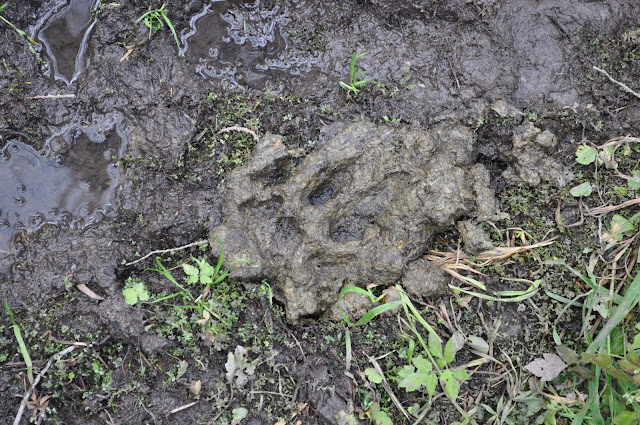
The next day we hiked another trail, a 7 mile hike on the McDonald Lake Trail. It is a mostly flat trail that follows along the western side of the lake, heading in a general NE direction. A large portion of the hike goes along an area that suffered from a wildfire not too many years ago. The skeletons of trees stand tall, and wildflowers were blooming everywhere. We also noticed bear scat fairly often right on the trail, many of them obviously too large to be a black bear. Maybe those bear bells weren’t so goofy after all.


Bear scat with a print along the McDonald Lake Trail in Glacier N.P.

Glacier National Park was beautiful. The mountains were topped with snow, the lakes were clear and cold,  and the scenery was green and in bloom. Ironically, although I had come to Glacier National Park in hopes to see a glacier there was too much snow on the trails to get to a glacier.
I often wonder if people who live in big cities think that the wilderness really is like this, if they think wildlife come right up to you like they do in Yellowstone and Glacier. If we sacrifice some of nature to promote funding for preservation of itself at large, are we giving people the wrong idea? How many people feel comfortable preserving a place where the animals are dangerously used to humans, and attacks aren’t as uncommon as they are in the true wild.
Perhaps the West could enlighten me, as it was time to start heading towards the coast. This about as far north as I would be going for the remainder of my trip. Time to start getting warmer.
-Nicole

Someone rowing on Lake McDonald...I'm not sure what this sport is called, but it's the new thing apparently. June 20, 2011


Slick rocks in Glacier N.P., N. McDonald Creek. June 20, 2011Wildflowers in Glacier N.P. June 20, 2011


The lichens in Glacier N.P. reminded me of the moss of the deep south. June 20, 2011


The colors of the sunset in a puddle on Avalanche Creek Trail, Glacier N.P.The Avalanche Creek campsite at Glacier N.P. June 20, 2011


The Avalanche Creek campsite in Glacier N.P. June 20, 2011


Wildflowers in Glacier N.P. June 20, 2011


Rock outcrop in N. McDonald Creek. Check out the preferred jointing!

Day 42: A Drive through Montana

Today I left Yellowstone, and although it is considered by many to be the most scenic national park in the country, it didn’t mean I left all of the scenery and wilderness behind. Driving throught the state of Montana is a series of scenic views, one right after the other. The land stretched for miles with few interruptions allowing you to see for miles and miles (and also meaning there are many miles between gas stations, fill up!).
Along the highway heading north from the park that barely stretches into the southwestern corner of the state, Montana natives greeted me on the highway. Some big horn sheep blocked the highway along a mountain pass. They were thin and shaggy from the long winter and watched as I inched my way past them and snapped some pictures with my cell phone.

Big Horn Sheep taking control of the highway in Montana. June 19, 2011

The glacial lakes of the state are just as breathtaking, the water so clear you can see straight to the bottom even when the water is several feet deep. Montana has two sides of a coin: The fiery breaths of a supervolano and the icy glaciers of the far north. Tomorrow I was heading with my friend, who lives in Missoula, to the opposite side of the coin. Glacier National Park has some spectacular hiking trails to hit, and we were ready.
-Nicole

Flathead Lake of Montana. The water is so clear.... about 3 feet deep at this spot where I took the picture.
Big Horn sheep of Montana June 19, 2011


A scenic Montana highway view. June 19, 2011